Itch Mouse, Unlabeled, Clone: 32, Bd, Mouse Monoclonal Antibody, Each
|
|
Details
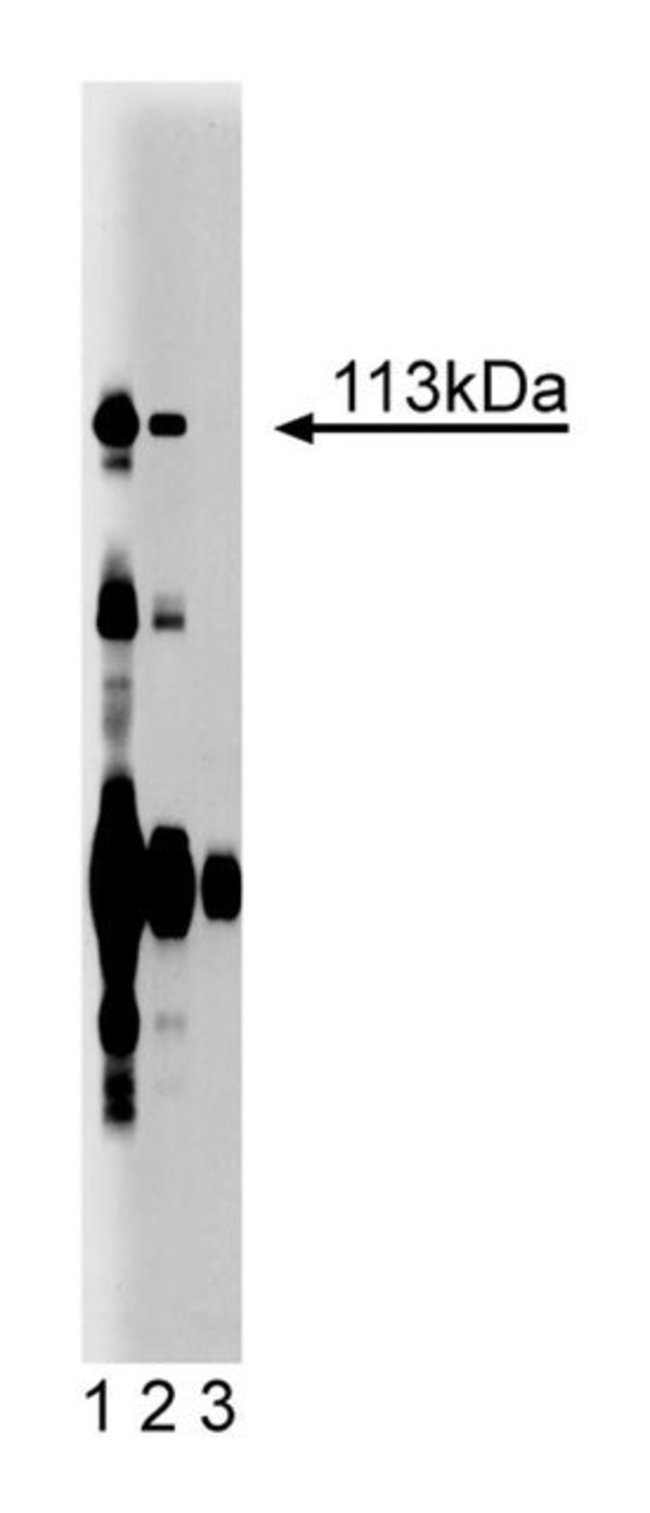
Maintenance of cellular function requires timely and selective degradation of key regulatory proteins. For example, progression of the mammalian cell cycle is regulated by phosphorylation/dephosphorylation and synthesis/degradation of many key proteins via the ubiquitin pathway. Ubiquitin, a soluble protein of 76 amino acids, is enzymatically attached to an ε-nh2-lys in a target protein. Ubiquitin-conjugated proteins are recognized and degraded by the 26s proteasome. Ubiquitination requires ubiquitin-activating enzyme e1, ubiquitin-conjugating enzymes e2, and ubiquitin ligases e3. The direction of ubiquitin transfer is from e1 to e2 and from e2 to e3. Itch, a novel e3 ubiquitin ligase, is absent in the non-agouti-lethal 18h mice. These mice develop immunological, inflammatory, epithelial, and hematopoietic diseases. Itch contains four ww protein interaction domains, which bind to proline-rich sequences in a fashion similar to sh3 domains. In addition, itch contains a c-terminal hect domain, which is conserved in the e3 family of ubiquitin ligases. Thus, itch is important in the ubiquitin-dependent protein degradation occurring in normal hematopoiesis and inflammation.Host species: mouseclone: 32isotype: igg1species reactivity: ratimmunogen: mouse itch aa. 114-220Formula weight [chemical]: 113kdaimmunofluorescence, western blotting
Additional Information
| SKU | 10135309 |
|---|---|
| UOM | Each |
| UNSPSC | 12352203 |
| Manufacturer Part Number | 611198 |
