PkcΛ Mouse, Unlabeled, Clone: 41, Bd, Mouse Monoclonal Antibody, Each
|
|
Details
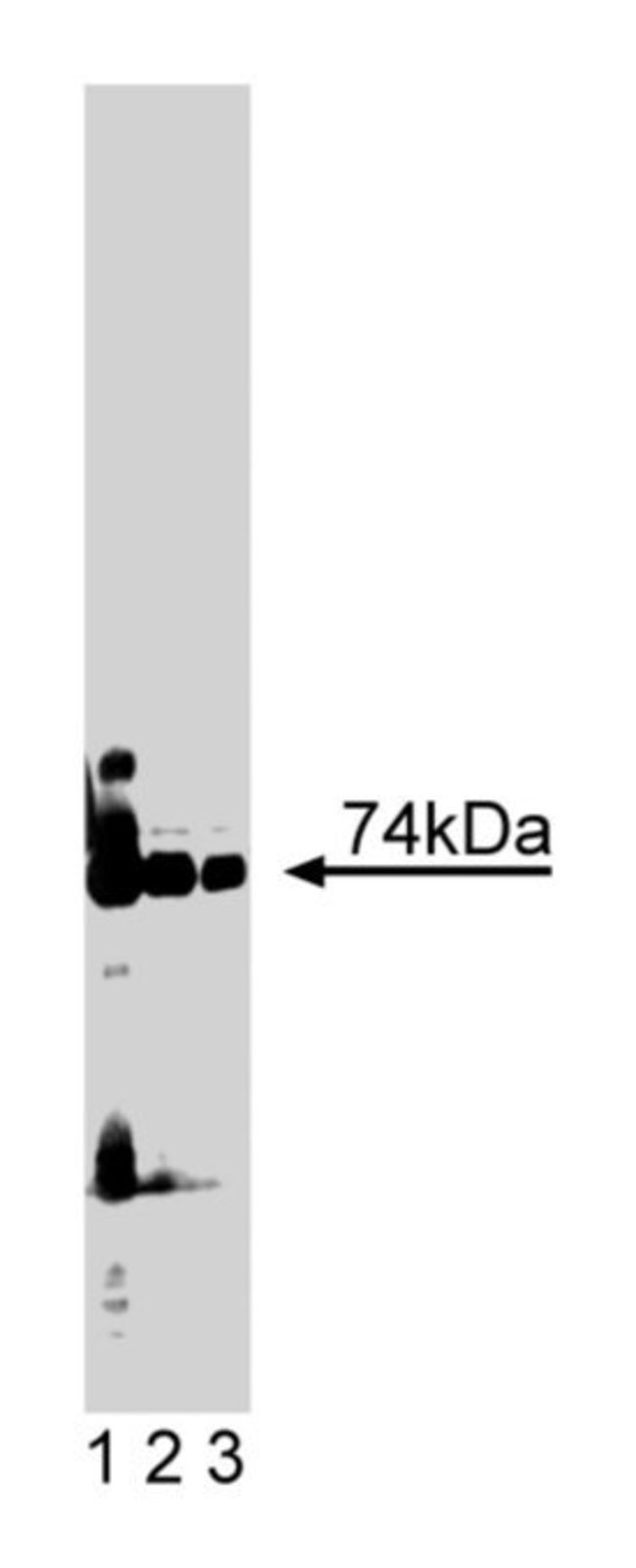
The protein kinase c (pkc) family of homologous serine/threonine protein kinases is involved in a number of processes such as growth, differentiation, and cytokine secretion. At least eleven isozymes have been described. These proteins are products of multiple genes and alternative splicing. Pkc consists of a single polypeptide chain containing four conserved regions (c) and five variable regions (v). The n-terminal half containing c1, c2, v1, and v2 constitutes the regulatory domain and interacts with the pkc activators ca2+, phospholipid, diacylglycerol, or phorbol ester. However, the novel pkc (npkc) subfamily members ( δ, ε, η, and θ isoforms) and the atypical pkc (apkc) subfamily members (ζ, ι, and λ isoforms) are ca2+ independent and lack the c2 domain. The apkc members are unique in that their activity is independent of diacylglycerols and phorbol esters. They also lack one repeat of the cysteine-rich sequences that are conserved in cpkc and npkc. The c-terminal region of pkc contains the catalytic domain. The pkc pathway represents a major signal transduction system that is activated following ligand-stimulation of transmembrane receptors by hormones, neurotransmitters, and growth factors. Pkc? Shows the highest degree of amino acid homology with pkcζ (72%) and pkcλ mrna is expressed in a variety of cells and tissues. The pkcλ protein kinase is capable of autophosphorylation and can be activated by phosphatidylserine, but not by other pkc activators such as diacylglycerols, ca2+, or phorbol esters.Immunofluorescence, immunohistochemistry, immunoprecipitation, western blotting
Additional Information
| SKU | 10134844 |
|---|---|
| UOM | Each |
| UNSPSC | 12352203 |
| Manufacturer Part Number | 610207 |
